

What Is a Head Spa? Services, Setup, and Equipment Explained
Originating in Japan, a head spa is a holistic wellness and scalp care treatment that merges traditional acupressure massage, aromatherapy, hydrotherapy, and deep-cleansing dermatological care. Unlike a standard salon wash that focuses on styling hair, a head spa treats the scalp as an extension of facial skin – clearing clogged follicles, stimulating blood circulation, and relieving nervous system tension.
The surge in consumer demand is backed by hard market data. According to Grand View Research, the global scalp care market was valued at USD 14.32 billion in 2023 and is projected to grow at a compound annual growth rate (CAGR) of 7.3% through 2030 (Grand View Research). Simultaneously, wellness industry tracking shows that consumer interest in “skinification of hair” – treating scalp health with the same rigor as facial skincare which has become one of the fastest-growing segments in the $1.8 trillion global wellness economy (Global Wellness Institute).
Whether you are a beauty consumer exploring the treatment or a salon owner looking to add a high-margin service, here is a complete breakdown of head spa services, spatial setup, and essential equipment. Let’s get started now!
What Is a Head Spa: Core Head Spa Services
First of all, a standard head spa session lasts between 45 and 90 minutes and typically commands an average service ticket of $120 to $250 in North American and European markets (American Spa). While menus vary, most protocols follow a structured five-stage progression:
- Microscopic Scalp Analysis: Using a high-magnification trichology camera (typically 200x zoom), a specialist examines the scalp for sebum buildup, dryness, inflammation, or follicle miniaturization before selecting custom botanicals.
- Detoxification & Exfoliation: Oil-based cleansers, salicylic acid serums, or fine botanical scrubs break down oxidized sebum, dead skin cells, and styling product residue.
- Micro-Mist Steam Therapy: Warm, ionized steam opens hair cuticles and scalp pores, allowing active ingredients to penetrate deeper while relaxing tight cranial muscles.
- Water Halo & Acupressure Massage: A signature gold or stainless-steel water circulation ring (“waterfall halo”) cascades warm water across the hairline while the practitioner performs rhythmic lymphatic drainage and Shiatsu acupressure along the scalp, neck, and shoulders. Clinical studies on standardized scalp massage have demonstrated that consistent mechanical stimulation increases dermal papilla cell activity and promotes measurable increases in hair thickness over 24 weeks (Eplasty / National Library of Medicine).
- Nourishing Mask & Blow-Dry Finish: A targeted hydration mask or peptide serum is sealed into the scalp and strands, followed by a gentle towel dry or blowout.
Head Spa Setup: Spatial & Plumbing Requirements
Designing a profitable head spa requires balancing serene sensory aesthetics with strict commercial utility standards. Unlike a standard hair station, a head spa operates closer to a wet-room medical spa.
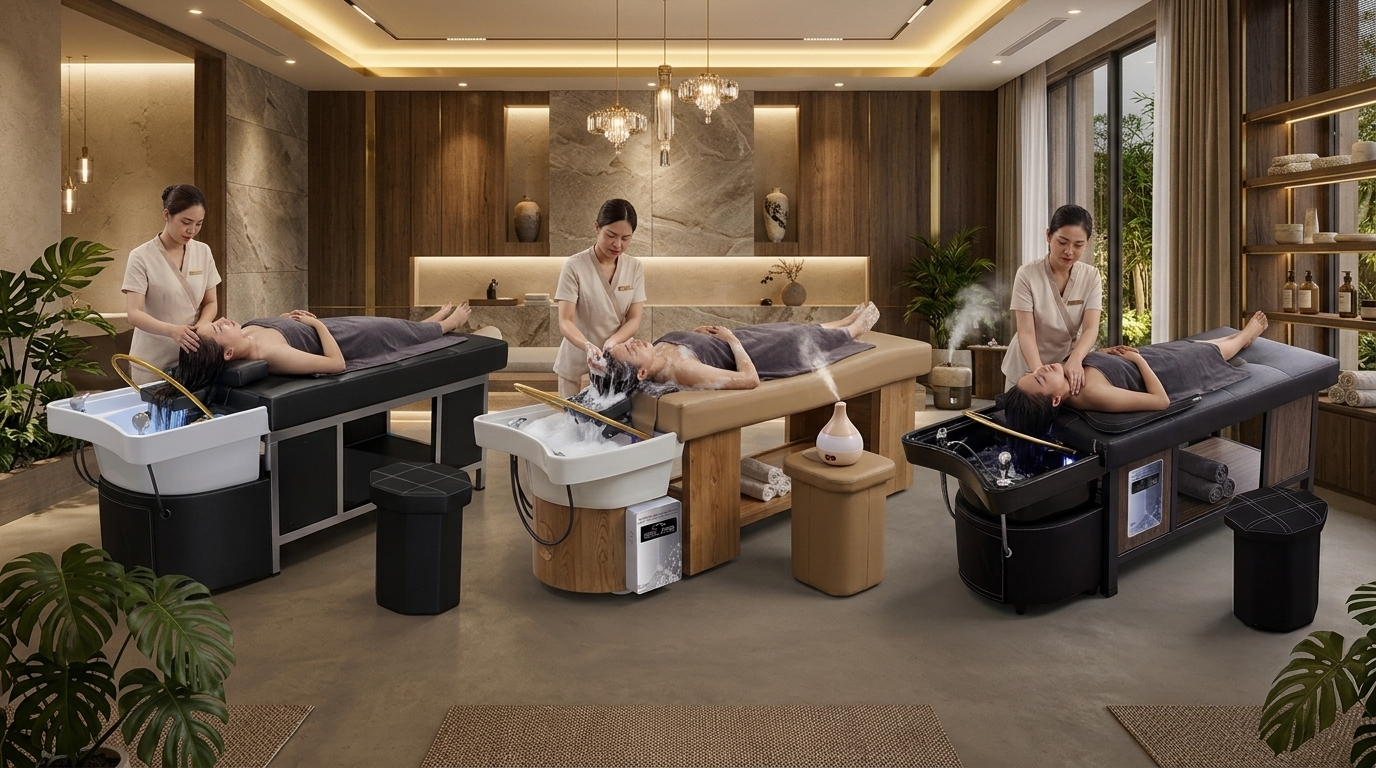
Space Allocation & Acoustics
Minimum Footprint: Allocate at least 80 to 100 square feet (7.5 to 9.3 sq meters) per treatment suite. This ensures comfortable clearance around the bed for the practitioner to move from the crown to the shoulders without obstruction.
Acoustic Isolation: Because relaxation is a primary selling point—with 76% of consumers citing stress reduction as a top motivator for booking spa services (International SPA Association – ISP – treatment rooms should be separated from noisy hair-drying zones using sound-dampening drywall or heavy acoustic curtains.
Plumbing, Drainage & Water Heating
Floor vs. Wall Drainage: Most professional head spa beds require dedicated hot and cold water supply lines plus a floor drain directly beneath or behind the basin. Retrofitting concrete floors for drainage is often the largest hidden renovation expense, averaging $2,500 to $6,000 per station depending on local commercial plumbing codes.
Tankless Water Heater: Continuous waterfall halos consume substantial warm water. A commercial-grade tankless water heater is essential to maintain a steady water temperature between 100°F and 104°F (38°C–40°C) across back-to-back appointments.
Lighting & Ventilation
Dimmable Indirect Lighting: Avoid overhead fluorescent bulbs that shine directly into a supine client’s eyes. Install recessed perimeter LEDs with warm color temperatures (2700K–3000K) on dimmer switches.
Humidity Control: Micro-mist steamers and warm water arches elevate room humidity rapidly. Install commercial exhaust ventilation rated for at least 80 to 110 CFM per room to prevent mold growth and protect drywall.
What Is a Head Spa: Main Head Spa Equipment Checklist
Investing in durable, ergonomic equipment protects practitioners from repetitive strain while delivering the viral “waterfall” experience clients expect.
The Business Case: Why Salons Are Adding Head Spas?
For salon and spa owners, a head spa bridges the gap between high-frequency hair services and high-ticket wellness treatments. According to data from the Professional Beauty Association (PBA), salons that diversify into specialized scalp and wellness treatments report higher client retention and stronger retail attachment rates, as clients who view their scalp condition under a 200x camera are significantly more likely to purchase prescribed take-home serums and exfoliants (Professional Beauty Association).
With startup equipment costs per suite typically ranging between $3,000 and $7,000 (excluding major plumbing construction), a single head spa station running just four appointments a day at $150 per session can generate $18,000 in monthly gross service revenue, allowing most operators to recoup equipment investments within the first two to three months of operation.
What Is a Head Spa: Final Words
Launching a profitable head spa starts with investing in the right centerpiece. Your shampoo bed is not just a piece of furniture – it is the foundation of the client’s sensory experience and your practitioner’s daily ergonomics. Cutting corners on basin depth, water circulation precision, or upholstery durability can quickly lead to costly leaks and uncomfortable sessions.
At KaShant, we engineer commercial-grade head spa beds designed specifically for modern salons, med-spas, and wellness studios. From full-body ergonomic beds with built-in waterfall halos to integrated micro-mist fumigation systems, every unit is built for effortless plumbing installation, long-term durability, and maximum client comfort.
Now, it’s time for you to explore our full collection of KaShant Head Spa Beds to compare models, technical specifications, and custom upholstery options.






Leave a Reply