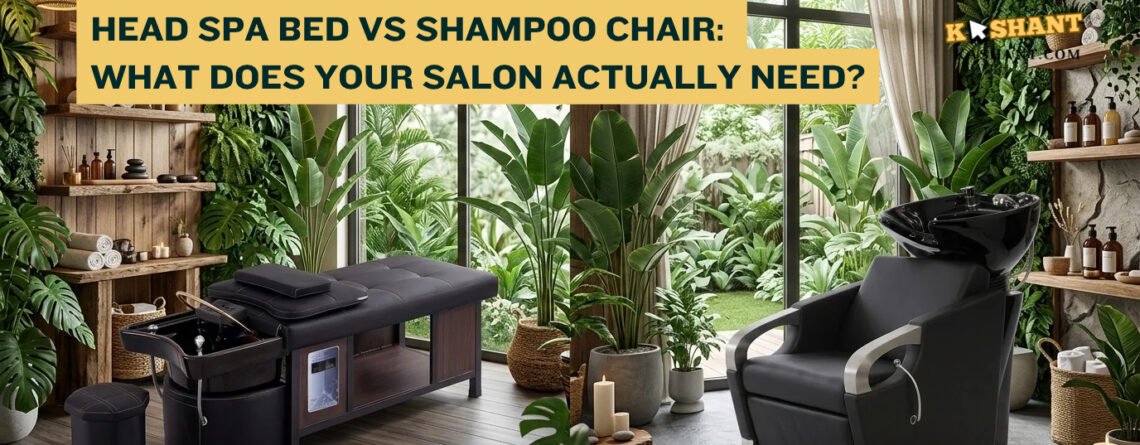
head spa bed vs shampoo chair

Head Spa Bed vs Shampoo Chair: What Does Your Salon Actually Need?

Choosing the right shampoo station is more important than many salon owners realize. It affects your service menu, customer comfort, stylist workflow, and even how clients perceive the overall quality of your salon. But when it comes to investing in new equipment, one question often comes up: Should you choose a head spa bed vs shampoo chair? Both options are designed to make hair-washing services easier and more comfortable. However, they serve different purposes and offer different business opportunities. A traditional shampoo chair is a practical choice for everyday hair-washing routines, while a head spa bed is designed to create a more immersive relaxation and scalp-care experience. So, which one is the better investment for your business? Let's compare their features, benefits, costs, and ideal applications to help you make the right decision.
Understanding the Difference: Head Spa Bed Vs Shampoo Chair

First of all, let's look at what makes these two pieces of salon equipment different.

What Is a Head Spa Bed?

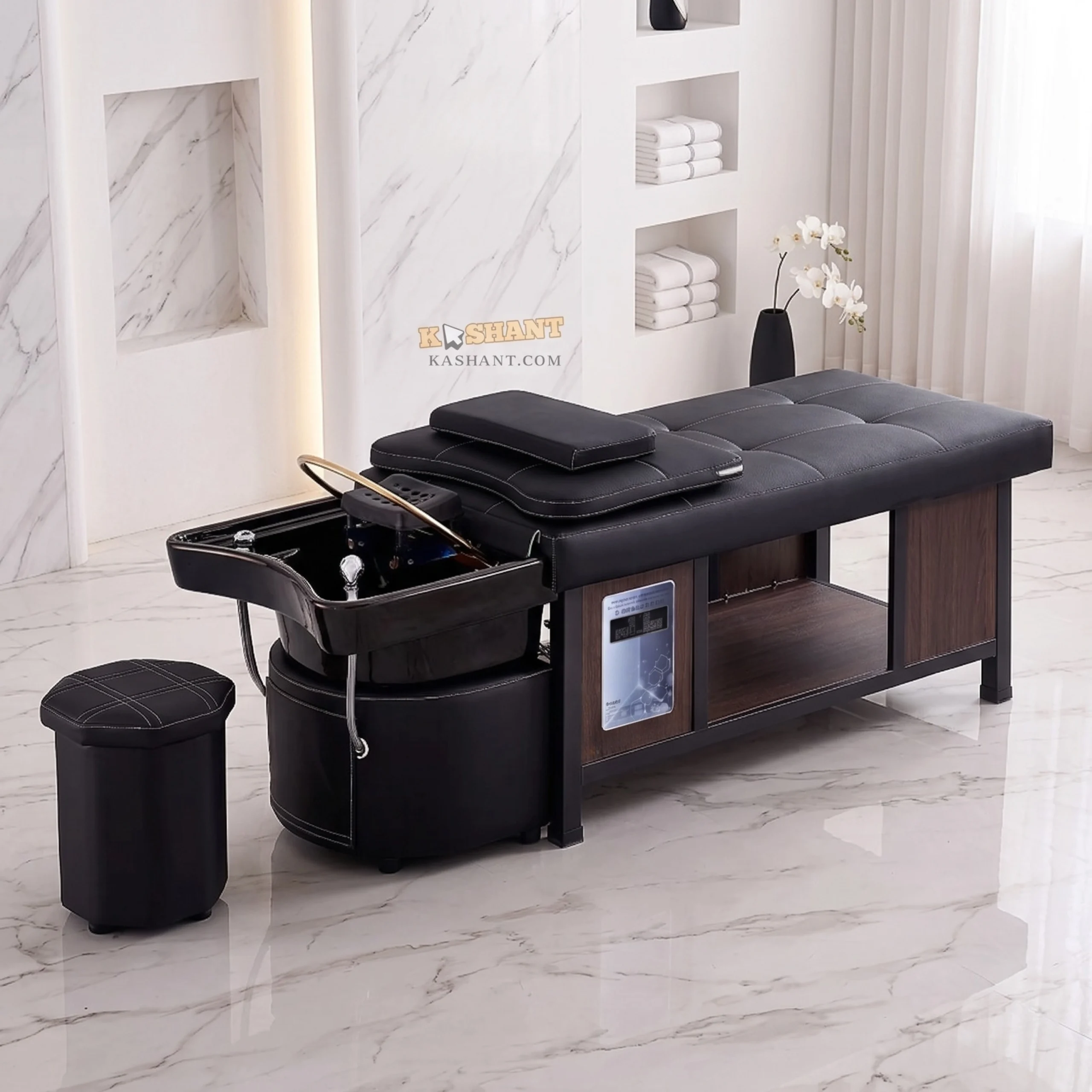
In our previous blog post, we introduced what is a head spa and also touched upon the "head spa bed." However, in this section, I will provide a brief recap. A head spa bed is a specialized treatment bed designed for scalp care, head spa treatments, and relaxation services. Unlike conventional shampoo stations, it typically allows clients to lie down in a more comfortable, reclined, or fully horizontal position. Many modern head spa beds feature an integrated ceramic shampoo basin, ergonomic neck support, adjustable settings, and additional features such as water circulation systems, steam functions, or massage capabilities, depending on the model. What's more, some advanced models are designed specifically for Japanese and Korean-inspired head spa treatments, where scalp cleansing, massage, and relaxation are combined into one service. Imagine your client lying comfortably on a spa bed while enjoying a warm scalp treatment, gentle water flow, and a relaxing head massage. It is more than just washing hair; it creates an experience that clients may want to return for. Head Spa Bed vs Shampoo Chair - Head spa bed 1

What Is a Traditional Shampoo Chair?

A shampoo chair, also known as a shampoo bowl chair or backwash unit, is a standard piece of equipment in most hair salons. It usually consists of a cushioned chair paired with a shampoo basin. Clients sit back, tilt their heads toward the basin, and receive hair-washing services while the stylist works from behind. Its main purpose is functionality. It makes everyday salon tasks such as shampooing, rinsing, conditioning, and preparing hair for cutting or coloring more convenient. Compared with a head spa bed, a traditional shampoo chair generally takes up less space and is easier to integrate into an existing hair salon. Head Spa Bed vs Shampoo Chair - Shampoo Chair 1

Head Spa Bed Vs Shampoo Chair: 5 Key Differences

Now that we understand their basic functions, let's compare the two options based on the factors that matter most to salon owners.

Client Comfort and Treatment Experience

The first point is client comfort. A traditional shampoo chair provides adequate support for short hair-washing sessions. However, keeping the neck tilted backward against a shampoo basin may become uncomfortable for some clients, especially during longer treatments. A head spa bed offers a different experience. Its lying-down design distributes body support across a larger surface, while an ergonomic neck cushion helps support the head during scalp treatments. This makes it particularly suitable for services lasting 30–90 minutes, depending on your treatment protocol. Our recommendation: If your salon wants to provide more relaxing, extended scalp-care services, a head spa bed is worth considering. After all, clients who book a premium treatment often expect more than a quick shampoo and rinse!

Functions and Treatment Versatility

Another aspect you should take notice of is functionality. A traditional shampoo chair is primarily designed for basic hair-washing tasks. Some models offer reclining backrests, adjustable height, and comfortable upholstery, but their functions are generally focused on conventional shampoo services. Meanwhile, a head spa bed can support a wider range of treatments, depending on its configuration:
  • Deep scalp cleansing and exfoliation.
  • Japanese and Korean-inspired head spa treatments.
  • Scalp massage and relaxation.
  • Hair and scalp conditioning treatments.
  • Steam-assisted hair treatments, where supported by the equipment.
Furthermore, certain head spa beds come with smart temperature controls, integrated water systems, and adjustable treatment settings. This versatility gives salon owners more opportunities to develop specialized service packages rather than relying entirely on traditional shampooing.

Space Requirements and Salon Layout

Next, consider how much space you have available. Traditional shampoo chairs are usually easier to fit into compact salon layouts. They work well in standard backwash areas, particularly when you need multiple washing stations to serve several clients simultaneously. Head spa beds generally require more dedicated space because of their larger treatment surfaces and additional equipment. Besides that, you should consider plumbing connections, electrical outlets, water drainage, and the space required for stylists to move comfortably around the bed. Before purchasing, measure your available floor space and check the manufacturer's installation requirements. A beautiful head spa bed will not be a smart investment if it makes your treatment room difficult to navigate!

Business Investment and Revenue Opportunities

Of course, budget is another important consideration when we compare Head Spa Bed vs Shampoo Chair. Traditional shampoo chairs are generally a more straightforward investment for salons that primarily provide haircuts, coloring, and everyday washing services. Head spa beds may require a higher initial investment, especially when choosing models with integrated water systems, heating functions, or additional treatment features. However, the business value of a head spa bed should not be evaluated by its purchase price alone. For example, a salon could introduce a dedicated 60-minute head spa package instead of offering only basic shampoo services. The owner can then calculate its potential profitability based on the actual service price, product costs, labor, operating expenses, and appointment availability. There is also a broader employment trend worth considering. According to the U.S. Bureau of Labor Statistics (BLS), employment of barbers, hairstylists, and cosmetologists is projected to grow by 7% from 2025 to 2035, with approximately 80,300 job openings annually over that period. Although these figures do not directly measure demand for head spa equipment, they provide useful context about the US personal-care service industry and its employment outlook. For salon owners, the takeaway is simple: choose equipment that supports the services your customers actually want and that your team can deliver profitably.

Maintenance and Daily Operation

The next feature to consider is maintenance. A traditional shampoo chair typically has a relatively simple setup, making routine cleaning and maintenance more straightforward. A head spa bed may involve additional components, including water pumps, drainage systems, heating elements, and electronic controls. These features can enhance the treatment experience, but they also require proper cleaning and regular inspection. For both options, pay attention to:
  • Water-resistant and easy-to-clean upholstery.
  • Durable basin materials.
  • Reliable plumbing connections.
  • Comfortable and supportive neck cushions.
  • Manufacturer warranty and replacement-part availability.
Our advice for Head Spa Bed vs Shampoo Chair? Don't focus only on appearance. A piece of equipment that is easy to maintain can save your salon considerable time during busy working days.

Head Spa Bed Vs Shampoo Chair: Which One Should Your Salon Choose?

So, which option makes more sense for your business? The answer depends on your service model and long-term goals. Choose a Shampoo Chair If:
  • Your primary services are haircuts, coloring, blowouts, and regular shampooing.
  • You operate a traditional hair salon with frequent client turnover.
  • Your available floor space is limited.
  • You want a practical, straightforward shampoo station.
  • Your budget prioritizes essential salon equipment.
For example, a busy hair salon serving 15–20 clients daily may benefit more from installing several reliable shampoo stations than investing in a specialized head spa bed that is only used occasionally. Choose a Head Spa Bed If:
  • You want to introduce premium scalp-care and relaxation services.
  • Your salon specializes in Japanese or Korean-inspired head spa treatments.
  • You operate a spa, beauty studio, or salon with a dedicated treatment room.
  • You want to offer longer, experience-focused appointments.
  • You have the space, plumbing, and budget to support specialized equipment.
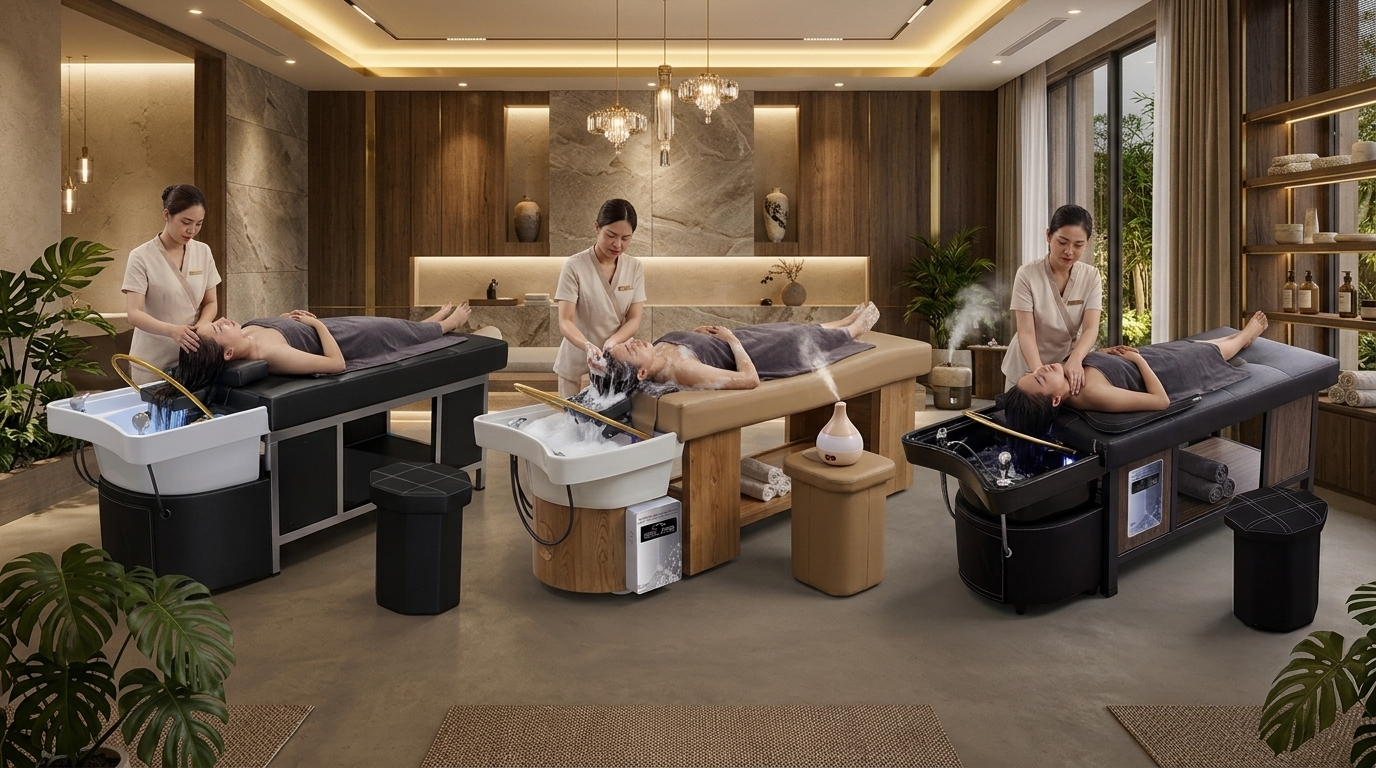
If you are planning to build a premium head spa business, investing in a comfortable, well-designed treatment bed can help create the professional atmosphere your clients expect. Head Spa Bed vs Shampoo Chair: Can You Have Both? Absolutely! In fact, this may be the most practical solution for growing salons. A traditional shampoo chair can handle everyday washing, rinsing, and conditioning, while a head spa bed can be reserved for specialized treatments. This arrangement allows you to serve different customer needs without forcing every client into the same service experience.

What Should You Look for Before Buying a Head Spa Bed?

If you decide that a head spa bed is the right choice, don't rush into purchasing the first attractive model you find. Here are five important features to evaluate:
  • Ergonomic design: Look for comfortable body support, an appropriate bed height, and a well-designed neck cushion to help clients relax during extended treatments.
  • Basin quality: A durable ceramic basin with a comfortable neck-support area can make a noticeable difference in everyday use.
  • Water and temperature control: Check whether the model offers adjustable water flow, temperature settings, and a reliable drainage system.
  • Upholstery and construction: Choose easy-to-clean, water-resistant materials and a sturdy frame designed for regular salon operation.
  • After-sales support: Confirm the warranty, installation requirements, maintenance instructions, and availability of replacement parts before placing your order.
  • Remember, the best head spa bed is not necessarily the one with the most features. It is the one that matches your treatment menu, space, and daily business operations.

Final Thoughts: Head Spa Bed vs Shampoo Chair

Ultimately, the choice between a head spa bed vs shampoo chair comes down to what you want your salon to offer. If your priority is everyday hair-washing efficiency, a traditional shampoo chair remains a reliable and practical solution. However, if you want to expand into premium scalp treatments and create a more relaxing client experience, a head spa bed may open up new possibilities for your business. And if your budget and floor plan allow it, combining both options can give your salon greater service flexibility. Ready to upgrade your salon equipment? Explore KaShant's collection of professional head spa beds and shampoo bed chairs to find a solution that fits your business. Whether you are opening a new salon or upgrading an existing treatment room, the right equipment can help you create a more comfortable and professional experience for every client.
Read more...
what is a head spa

What Is a Head Spa? Services, Setup, and Equipment Explained

Originating in Japan, a head spa is a holistic wellness and scalp care treatment that merges traditional acupressure massage, aromatherapy, hydrotherapy, and deep-cleansing dermatological care. Unlike a standard salon wash that focuses on styling hair, a head spa treats the scalp as an extension of facial skin - clearing clogged follicles, stimulating blood circulation, and relieving nervous system tension. The surge in consumer demand is backed by hard market data. According to Grand View Research, the global scalp care market was valued at USD 14.32 billion in 2023 and is projected to grow at a compound annual growth rate (CAGR) of 7.3% through 2030 (Grand View Research). Simultaneously, wellness industry tracking shows that consumer interest in "skinification of hair" - treating scalp health with the same rigor as facial skincare which has become one of the fastest-growing segments in the $1.8 trillion global wellness economy (Global Wellness Institute). Whether you are a beauty consumer exploring the treatment or a salon owner looking to add a high-margin service, here is a complete breakdown of head spa services, spatial setup, and essential equipment. Let's get started now!

What Is a Head Spa: Core Head Spa Services

First of all, a standard head spa session lasts between 45 and 90 minutes and typically commands an average service ticket of $120 to $250 in North American and European markets (American Spa). While menus vary, most protocols follow a structured five-stage progression:
  • Microscopic Scalp Analysis: Using a high-magnification trichology camera (typically 200x zoom), a specialist examines the scalp for sebum buildup, dryness, inflammation, or follicle miniaturization before selecting custom botanicals.
  • Detoxification & Exfoliation: Oil-based cleansers, salicylic acid serums, or fine botanical scrubs break down oxidized sebum, dead skin cells, and styling product residue.
  • Micro-Mist Steam Therapy: Warm, ionized steam opens hair cuticles and scalp pores, allowing active ingredients to penetrate deeper while relaxing tight cranial muscles.
  • Water Halo & Acupressure Massage: A signature gold or stainless-steel water circulation ring ("waterfall halo") cascades warm water across the hairline while the practitioner performs rhythmic lymphatic drainage and Shiatsu acupressure along the scalp, neck, and shoulders. Clinical studies on standardized scalp massage have demonstrated that consistent mechanical stimulation increases dermal papilla cell activity and promotes measurable increases in hair thickness over 24 weeks (Eplasty / National Library of Medicine).
  • Nourishing Mask & Blow-Dry Finish: A targeted hydration mask or peptide serum is sealed into the scalp and strands, followed by a gentle towel dry or blowout.

Head Spa Setup: Spatial & Plumbing Requirements

Designing a profitable head spa requires balancing serene sensory aesthetics with strict commercial utility standards. Unlike a standard hair station, a head spa operates closer to a wet-room medical spa. what is a head spa 1

Space Allocation & Acoustics

Minimum Footprint: Allocate at least 80 to 100 square feet (7.5 to 9.3 sq meters) per treatment suite. This ensures comfortable clearance around the bed for the practitioner to move from the crown to the shoulders without obstruction. Acoustic Isolation: Because relaxation is a primary selling point—with 76% of consumers citing stress reduction as a top motivator for booking spa services (International SPA Association - ISP - treatment rooms should be separated from noisy hair-drying zones using sound-dampening drywall or heavy acoustic curtains.

Plumbing, Drainage & Water Heating

Floor vs. Wall Drainage: Most professional head spa beds require dedicated hot and cold water supply lines plus a floor drain directly beneath or behind the basin. Retrofitting concrete floors for drainage is often the largest hidden renovation expense, averaging $2,500 to $6,000 per station depending on local commercial plumbing codes. Tankless Water Heater: Continuous waterfall halos consume substantial warm water. A commercial-grade tankless water heater is essential to maintain a steady water temperature between 100°F and 104°F (38°C–40°C) across back-to-back appointments.

Lighting & Ventilation

Dimmable Indirect Lighting: Avoid overhead fluorescent bulbs that shine directly into a supine client's eyes. Install recessed perimeter LEDs with warm color temperatures (2700K–3000K) on dimmer switches. Humidity Control: Micro-mist steamers and warm water arches elevate room humidity rapidly. Install commercial exhaust ventilation rated for at least 80 to 110 CFM per room to prevent mold growth and protect drywall.

What Is a Head Spa: Main Head Spa Equipment Checklist

Investing in durable, ergonomic equipment protects practitioners from repetitive strain while delivering the viral "waterfall" experience clients expect.
Equipment Category Key Specifications to Look For Est. Cost (USD) Pro Buying & ROI Tip
Head Spa Shampoo Bed Full-body lie-flat ergonomic cushioning, deep ceramic or acrylic basin, silicone neck rest, and integrated brass/stainless-steel water circulation arch. $1,800 – $4,500 Choose waterproof PU leather and verify local plumbing fitting compatibility (1/2" NPT) before importing.
Micro-Mist Hair Steamer Ultrasonic atomization (finer mist than traditional steamers), digital timer, ozone sterilization mode, and a clear dome hood that seals around the hairline. $400 – $1,200 Always use distilled water to prevent mineral scale buildup inside the ultrasonic transducer.
Digital Scalp Scope 200x magnification lens, dual white/UV polarized light modes (detects sebum & bacteria), and Wi-Fi tablet connectivity for before-and-after photos. $150 – $500 Highest retail ROI tool—showing clients clogged follicles visually boosts take-home serum sales by over 40%.
Fumigation & Oil Infuser Water-compatible aromatherapy unit designed to safely disperse pure essential oils into the recirculating waterfall halo without clogging nozzles. $100 – $300 Flush the internal line with warm water and mild vinegar weekly to avoid oil residue accumulation.
Towel Warmer & UV Sterilizer Dual-cabinet stainless steel interior capable of holding 24–36 cotton towels at a consistent 158°F (70°C) with built-in UV sanitization. $150 – $350 Pre-roll damp towels infused with eucalyptus oil each morning for a signature hot-towel neck wrap.
Ergonomic Practitioner Stool Pneumatic height adjustment (18"–24"), smooth-rolling hair-resistant casters, and lumbar/saddle support for 60-minute seated massages. $120 – $300 Prevents wrist and lower-back fatigue for stylists performing 4+ consecutive treatments daily.
Water Filtration & Softener System Multi-stage inline carbon and mineral filter that removes chlorine, heavy metals, and hard water calcium before water hits the scalp. $200 – $600 Essential in hard-water cities; protects color-treated hair and prevents white scale spots on black/gold basins.
Rolling Apothecary Trolley 3-tier silent-wheel utility cart with stainless steel mixing bowls, bamboo scalp brushes, gua sha combs, and timer display. $90 – $220 Keeps tools within arm's reach so the practitioner never has to break physical contact during massage phases.

The Business Case: Why Salons Are Adding Head Spas?

For salon and spa owners, a head spa bridges the gap between high-frequency hair services and high-ticket wellness treatments. According to data from the Professional Beauty Association (PBA), salons that diversify into specialized scalp and wellness treatments report higher client retention and stronger retail attachment rates, as clients who view their scalp condition under a 200x camera are significantly more likely to purchase prescribed take-home serums and exfoliants (Professional Beauty Association). With startup equipment costs per suite typically ranging between $3,000 and $7,000 (excluding major plumbing construction), a single head spa station running just four appointments a day at $150 per session can generate $18,000 in monthly gross service revenue, allowing most operators to recoup equipment investments within the first two to three months of operation.

What Is a Head Spa: Final Words

Launching a profitable head spa starts with investing in the right centerpiece. Your shampoo bed is not just a piece of furniture - it is the foundation of the client’s sensory experience and your practitioner’s daily ergonomics. Cutting corners on basin depth, water circulation precision, or upholstery durability can quickly lead to costly leaks and uncomfortable sessions. At KaShant, we engineer commercial-grade head spa beds designed specifically for modern salons, med-spas, and wellness studios. From full-body ergonomic beds with built-in waterfall halos to integrated micro-mist fumigation systems, every unit is built for effortless plumbing installation, long-term durability, and maximum client comfort. Now, it's time for you to explore our full collection of KaShant Head Spa Beds to compare models, technical specifications, and custom upholstery options.
Read more...
Mistakes When Opening a Nail Salon

Mistakes When Opening a Nail Salon [Updated 2026]

Launching a nail salon in the U.S. requires substantial upfront capital. According to industry startup benchmarks compiled by Booksy and SimpliNail, opening a small 6-station salon in a second-generation (pre-plumbed) space costs between $41,700 and $177,500, whereas building out a raw retail shell of the same size typically runs from $175,500 to over $317,000. First of all, it's time to recognize why cutting corners during the initial build-out phase rarely leads to genuine profitability. Although purchasing second-hand pedicure chairs or hiring unlicensed contractors may look like an easy way to trim your startup budget, these shortcuts quickly trigger chronic repair bills, regulatory fines, and lost client retention. Furthermore, because net profit margins in poorly managed salons can dip as low as 5% to 7% (compared to 15% to 45% in well-run salons, per Zenoti), even minor unexpected expenses can wipe out months of hard-earned revenue. Below is a closer look at the four most common financial traps when opening a nail salon, along with verified industry data showing how a standardized investment protects your bottom line.

Mistakes When Opening a Nail Salon: Equipment Outlays

Furniture and service stations typically account for $14,400 to $37,200 of a 6-station salon's startup budget (SimpliNail). Buying liquidated gear or non-commercial furniture to slash this expense creates three major operational setbacks:

Hidden Mechanical Failures in Used Pedicure Chairs

First of all, pre-owned pedicure spas often conceal worn-out massage motors, degraded seals, and clogged plumbing lines. Because discontinued models frequently lack factory warranty coverage and OEM replacement parts, a single broken pump can take a revenue-generating chair out of commission for weeks while costing thousands in emergency plumbing and flooring repairs. Mistakes When Opening a Nail Salon 1

Rapid Degradation from Acetone & Salon Chemicals

Secondly, nail stations are exposed daily to pure acetone, monomer, and gel cleansers. According to the UCLA Labor Center’s Nail Files California report, 52% of nail salon clients book gel polish services and 40% book acrylics—meaning low-grade particleboard tables and standard vinyl upholstery will not only bubble and peel within months, but also drive away discerning clients who expect a clean, upscale environment.

Lost Upsell Potential & Lower Retention

Industry consultants cited by NAILS Magazine report that the average salon loses 65% to 70% of first-time walk-ins (averaging only a 30%–35% new client retention rate). Also, basic manicures and pedicures account for only 26% of client bookings (UCLA Labor Center). Using outdated, uncomfortable chairs restricts your menu to basic $35–$45 services, whereas ergonomic, full-massage commercial chairs empower you to charge $70 to $100+ for deluxe spa packages.

Mistakes When Opening a Nail Salon: Real Estate Pitfalls

Rent and construction represent the largest fixed expenses for any salon, with national retail asking rents averaging ~$25 per sq. ft. per year and reaching $50/sq. ft. in major metro markets (Booksy). Choosing a location solely for a cheap lease often backfires:

Dead Rent from Unpermitted Construction

Build-out and renovation costs average $100 to $217 per sq. ft. due to specialized plumbing and electrical requirements (SimpliNail). Although hiring unlicensed contractors seems cheaper upfront, it frequently leads to failed municipal building, plumbing, or fire inspections. Furthermore, every week a Certificate of Occupancy (CO) is delayed forces you to pay "dead rent" alongside fixed overhead—typically requiring $5,000 to $50,000 in working capital reserves just to survive the first three to six months (Booksy).

Remote Locations & No-Show Revenue Loss

A cheap lease in a low-visibility strip center forces owners to overspend on local advertising. Also, data from NAILS Magazine estimates that salons lose 10% to 20% of potential monthly revenue to no-shows and late cancellations—equivalent to $1,500 to $3,000 per month for a salon generating $15,000 in bookings. Securing a high-visibility storefront paired with automated booking reminders helps protect your daily cash flow.

Poor Lighting & Ergonomics Hurt Productivity

Next, relying solely on standard commercial fluorescent tubes causes eye strain and inaccurate polish matching. Combining poor lighting with non-ergonomic seating slows down service times, directly hurting salon productivity, which NAILS Magazine notes should target 70% to 80% station utilization for healthy profitability.

Regulatory Oversights

It's time to treat regulatory compliance and indoor air quality as non-negotiable investments rather than optional overhead:

State Board Inspection Fines & Closures

State Boards of Cosmetology conduct unannounced audits for sanitation and licensure. A legislative audit by the Kentucky Legislative Research Commission (LRC Research Report 492) revealed that average State Board fines surged by 426.5% between 2019 and 2023, with individual salon penalties commonly reaching $10,000 to $25,000 and triggering immediate temporary closures. Furthermore, a multi-year study of Michigan nail salons published in ResearchGate found that nearly two-thirds of disciplinary actions involved unlicensed activity or expired licenses.

Inadequate Ventilation Drives Away Top Talent

Standard HVAC systems only dilute indoor air; they do not remove volatile organic compounds (VOCs) or ethyl methacrylate (EMA) vapors at the breathing zone. Because both OSHA and the U.S. EPA recommend source-capture local exhaust ventilation (LEV) systems at each workstation (typically costing $500 to $1,500 per station, per Booksy), skipping proper ductwork leaves your salon vulnerable to sanitation citations. Not only does NAILS Magazine report that over 70% of clients are willing to pay more for safe, low-toxin salons, but also U.S. Bureau of Labor Statistics (BLS) data shows 152,770 employed nail technicians nationwide with roughly 21,900 job openings annually, meaning salons with poor air quality quickly lose skilled staff to better-equipped competitors.

Mistakes When Opening a Nail Salon: Workflow Bottlenecks

Last but not least, trying to save money by skipping automated chair features and modern salon software creates daily labor bottlenecks—especially since 69% of nail salons operate with fewer than five employees (U.S. Census County Business Patterns / UCLA Labor Center). Running pedicure basins without automatic water-level shutoff (Auto-Fill) sensors forces technicians to constantly monitor filling tubs. Because a single distraction during a busy Saturday rush can cause basin overflows, skipping this feature risks ruined subflooring and costly water-damage repairs. Also, today's clients expect seamless convenience—from integrated wireless phone charging and built-in technician controls to online booking with deposit pre-authorization, which Rosper industry data shows can reduce no-shows on high-ticket services by 25% to 40%.

Build a Compliant, High-Margin Salon from Day One with KaShant LLC

Investing in commercial-grade equipment engineered for heavy daily salon traffic, chemical exposure, and strict municipal safety codes is the smartest way to protect your capital from day one. It's 100% UL-Certified Safety. Every electrical and mechanical component in the KaShant LLC Massage Chair and our full pedicure line carries official UL safety certification, not only keeping your clients and staff safe, but also helping you pass City and State Board inspections without costly delays. Furthermore, equipped with full-body multi-point massage systems, acetone-resistant upholstery, integrated touchscreen controls, wireless phone charging, and automated fill/drain protection, KaShant LLC chairs elevate the client experience and maximize repeat bookings. Finally, KaShant comes with complete salon packages and nationwide support. From synchronized custom manicure tables and technician stools to reception desks and pedicarts, KaShant LLC offers bundled package pricing, fast shipping across all 50 U.S. states.
Read more...

How to Write High Converting Sales Content That Actually Sells

Writing sales content is not difficult. The difficult part is creating content that makes people stop scrolling, recognize themselves in the message, understand the value, and take action. Many marketers and business owners start with the same question: “What should I post today to sell my product?” But that is not the most important question. A better starting point is: “What does my customer actually care about, and how can my product make their life or business better?” Because customers rarely buy a product simply because of what it is. They buy the result, experience, emotion, convenience, or value behind it. A lipstick is not just a lipstick. A Head Spa bed is not just a piece of equipment. A skincare treatment is not simply a treatment. Behind every purchase is a problem, need, desire, or aspiration. Great sales content identifies that underlying motivation and connects it naturally to the

1. What Is Sales Content Really About?

Sales content is more than putting a product in front of an audience and listing:
  • Product features
  • Specifications
  • Prices
  • Promotions
  • Where to buy
That is product information. Effective sales content answers a much more important question: “Why does this customer need this solution?” For example, instead of saying: “This Head Spa bed features 4D massage, foot airbags, and an integrated water circulation system.” You could say: “Turn a traditional shampoo service into a deeper relaxation experience that customers can feel from the moment they lie down.” The product features are still there. But now they are connected to something the customer actually values. That is the difference between describing a product and selling its value. The key to writing effective sales content is to write specifically for your target audience.

The key to writing effective sales content is to write specifically for your target audience.

2. Great Sales Content Starts With Understanding Your Customer

One of the biggest mistakes in content marketing is starting to write before knowing who you are writing for. A business may know its target audience is:
  • Women
  • 25–40 years old
  • Business owners
  • Middle to high income
But demographic information is only the beginning. Go Beyond Demographics To create stronger sales content, understand:
  • What problem are they experiencing?
  • What are they trying to achieve?
  • What are they worried about?
  • What prevents them from buying?
  • What alternatives are they considering?
  • What would make them believe your solution is worth paying for?
For example, a salon owner interested in adding Head Spa services may not actually be thinking: “I need to buy a Head Spa bed.” Their real concern may be: “I want to add a new service without spending too much on renovation.” Or: “I already have a salon space. How can I add Head Spa without completely redesigning it?” Or: “I want to offer a more premium experience so I can increase the perceived value of my services.” Determine the value you will deliver to customers.

Great sales content delivers significant value to customers.

3. Don't Just Sell the Product — Sell the Value Behind It

One of the most common problems with sales content is that it focuses too heavily on the product and not enough on the customer. You may know every feature your product has. Your customer does not necessarily care about all of them. They care about one question: “What does this do for me?” A useful way to structure your message is: Feature → Benefit → Value
  • Feature
The Head Spa bed includes a 4D massage system.
  • Benefit
Customers can receive a more comprehensive massage experience during their treatment.
  • Value
The salon can create a more premium service experience and increase the perceived value of each appointment. These three levels are different. Features explain what the product has. Benefits explain what the product does. Value explains why it matters. Strong sales content takes the customer all the way to the third level. inteligente humano cerebro volador junto a bombilla idea globos, ilustrando creatividad y inteligencia en lograr éxito. concepto de capacidad a aplicar conocimiento, sabiduría, innovar y imaginación 44009176 Vector en Vecteezy

The concept will determine how online sales content is written.


4. Content Writing Formula: Problem → Insight → Solution → Value

Instead of starting with: “Our new product…” Start with the customer's problem. A simple yet effective structure: Step 1: Problem What challenge is the customer facing? Step 2: Insight – What truly matters to them Why is that problem significant to them? Step 3: Solution How does the product or service address that problem? Step 4: Value What does the customer gain once the problem is resolved? Example: Problem: Want to add a Head Spa service but don't want to tear up the plumbing system? Insight: Many salons already have treatment beds but are reluctant to invest in costly plumbing renovations. Solution: A portable Head Spa system with integrated fresh water and wastewater tanks. Value: Flexibly add Head Spa services without altering the existing plumbing infrastructure. This is the moment the content begins to sell without the need for a heavy-handed sales pitch. How to Write High Converting Sales Content That Actually Sells

Researching customers effectively will help ensure that sales content is better received.

Exceptional sales content stems from deep understanding, not merely from words on a page. When you truly grasp a customer's needs, pain points, and motivations, your content transcends the role of a standard persuasive piece—it becomes a bridge connecting the customer's problem to the solution you offer. The goal of effective sales content and content marketing is not just to capture attention, but to build trust, convey value, and guide customers toward making the right decision. Ultimately, the most effective sales content does not feel like a hard sell. Instead, it presents itself as a solution to a problem the customer clearly recognizes.
Read more...

Hair Salon Design Trends in the US 2026

The US beauty industry is constantly evolving, and today, hair salons are no longer judged solely on the quality of their services. As we approach 2026, salon owners are investing more heavily in interior design, customer experience, and high-end equipment to create professional, luxurious, and memorable spaces. Modern clients desire more than just a great hairstyle; they expect an environment that is relaxing, sophisticated, and impressive enough to share on social media. From modern minimalist styles and spa-like atmospheres to the use of ergonomic furniture and eco-friendly materials, 2026 design trends focus on balancing aesthetics with functionality. Whether you are opening a new salon or planning to renovate an existing space, staying abreast of the latest design trends will help your salon stand out in the market, enhance the customer experience, and create a sustainable competitive advantage.

Why Is Hair Salon Design Important?

Salon design goes beyond mere decoration; it is a factor that directly influences how customers perceive the brand. Numerous studies in the retail and service sectors have shown that the surrounding environment significantly impacts emotions, purchasing decisions, and the likelihood of customer return visits. A well-designed salon offers numerous benefits, such as:
  • Creating a professional impression from the very first visit.
  • Providing a sense of relaxation and comfort throughout the service experience.
  • Enhance staff productivity through an efficient spatial layout.
  • Encourage customers to take photos and share them on social media.
  • Build a professional brand image.
  • Increase customer retention and word-of-mouth referrals.
Today, successful salons pay attention to every detail—such as lighting, color schemes, interior materials, and workspace layout—to create a flawless customer experience.

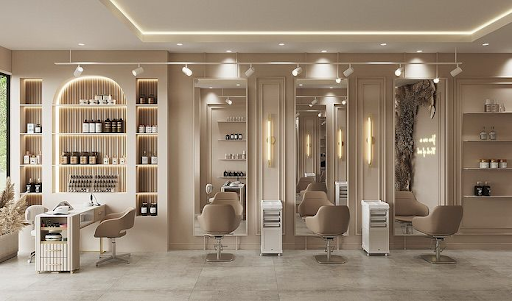
Luxurious hair salon interior featuring modern lighting.

A professionally designed space creates a strong first impression and elevates the customer experience.

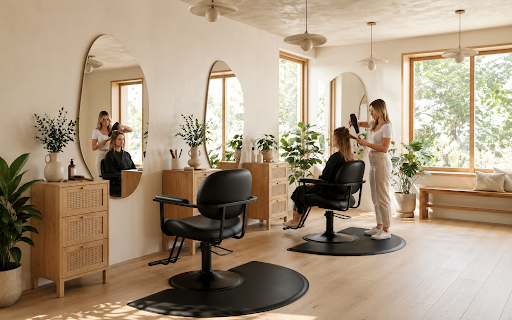
Hair Salon Design Trends in the US for 2026 1. Modern Minimalist Style

Minimalist design remains a popular choice for many US salons in 2026. Spaces are optimized through clean lines, neutral color palettes, and airy layouts, creating a sense of spaciousness and sophistication. Common elements include:
  • White, beige, and light gray tones.
  • A combination of wood and natural stone furnishings.
  • Built-in storage cabinetry.
  • Large mirrors to visually expand the space.
  • Open-concept design.
This style not only delivers a modern look but also ensures the salon maintains its aesthetic appeal over time. A modern hair salon featuring a minimalist style.
2. Salon Spaces That Offer a Relaxing Experience

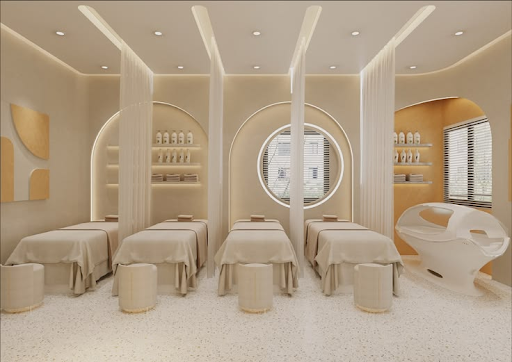
The "Wellness Beauty" trend is gaining momentum, transforming salons from mere hair styling venues into destinations for relaxation and self-care. Many salons are now investing in:
  • Head Spa areas.
  • Premium, relaxing shampoo chairs.
  • Luxurious waiting areas.
  • Soft, soothing lighting.
  • Aromatherapy scents.
  • Greenery for decoration.
  • These elements help clients feel at ease, turning every salon visit into a memorable experience.

A luxurious Head Spa area within the salon.
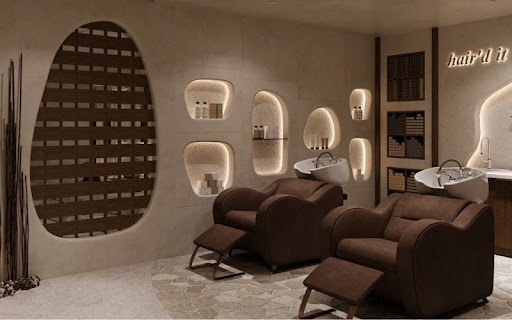
Integrating relaxation services enhances the overall customer experience.

3. High-End Salon Furniture and Equipment

Comfort has become a key factor that sets modern salons apart. Salon owners are willing to invest in:
  • Ergonomic cutting chairs.
  • Premium shampoo beds.
  • Luxurious waiting chairs.
  • High-quality cabinetry and workstations.
  • Modern styling stations.
Using high-quality equipment not only enhances client comfort but also reduces physical strain on technicians while they work.

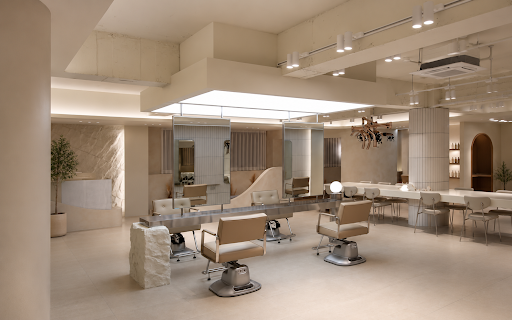
Professional salon equipment ensures comfort.

4. An "Instagram-Worthy" Space

In the age of social media, a beautiful salon does more than just serve clients—it acts as a powerful marketing tool. Many salons invest in design features such as:
  • "Check-in" corners.
  • Mirrors perfect for photos.
  • Neon signage.
  • Luxurious reception desks.
  • Unique decorative lighting.
These areas encourage clients to share photos on Instagram, Facebook, or TikTok, helping the salon reach new customers without significant advertising costs.

A great photo spot within the hair salon.

An attractive space encourages customers to share their experiences on social media.

The Role of High-End Salon Furniture and Equipment

Furniture and equipment are not merely "support" elements; they are core components that shape the service experience. A modern salon must ensure: - Aesthetics that align with the brand identity - Maximum comfort for clients - Optimized functionality for staff - Durability and longevity In particular, equipment such as styling chairs, shampoo beds, and styling stations plays a crucial role in defining service quality.

Key Considerations for Modern Salon Design

To build a successful salon in 2026, keep the following in mind: - Prioritize the customer experience over mere decoration - Invest in both natural and specialized lighting - Design a flexible, scalable space - Select durable, easy-to-clean furniture - Optimize the flow of movement within the salon - Create a distinct brand focal point - Incorporate "Instagrammable" elements A good design is not only visually appealing but also facilitates efficient operations.

Conclusion

Hair salon design trends in the US for 2026 go beyond modern aesthetics, focusing equally on customer experience, convenience, and sustainability. Investing in high-quality space, interiors, and equipment helps elevate a salon's brand image, create a distinctive identity, and boost long-term customer retention. Amidst rising customer expectations, a salon designed with a smart layout, a touch of luxury, and a relaxing atmosphere will always maintain a competitive edge in the market. If you are planning to open a new salon or renovate an existing one, select the right equipment and interior solutions to create a professional, modern space that delivers an exceptional customer experience.
Read more...