

Mistakes When Opening a Nail Salon [Updated 2026]
Launching a nail salon in the U.S. requires substantial upfront capital. According to industry startup benchmarks compiled by Booksy and SimpliNail, opening a small 6-station salon in a second-generation (pre-plumbed) space costs between $41,700 and $177,500, whereas building out a raw retail shell of the same size typically runs from $175,500 to over $317,000.
First of all, it’s time to recognize why cutting corners during the initial build-out phase rarely leads to genuine profitability. Although purchasing second-hand pedicure chairs or hiring unlicensed contractors may look like an easy way to trim your startup budget, these shortcuts quickly trigger chronic repair bills, regulatory fines, and lost client retention. Furthermore, because net profit margins in poorly managed salons can dip as low as 5% to 7% (compared to 15% to 45% in well-run salons, per Zenoti), even minor unexpected expenses can wipe out months of hard-earned revenue.
Below is a closer look at the four most common financial traps when opening a nail salon, along with verified industry data showing how a standardized investment protects your bottom line.
Mistakes When Opening a Nail Salon: Equipment Outlays
Furniture and service stations typically account for $14,400 to $37,200 of a 6-station salon’s startup budget (SimpliNail). Buying liquidated gear or non-commercial furniture to slash this expense creates three major operational setbacks:
Hidden Mechanical Failures in Used Pedicure Chairs
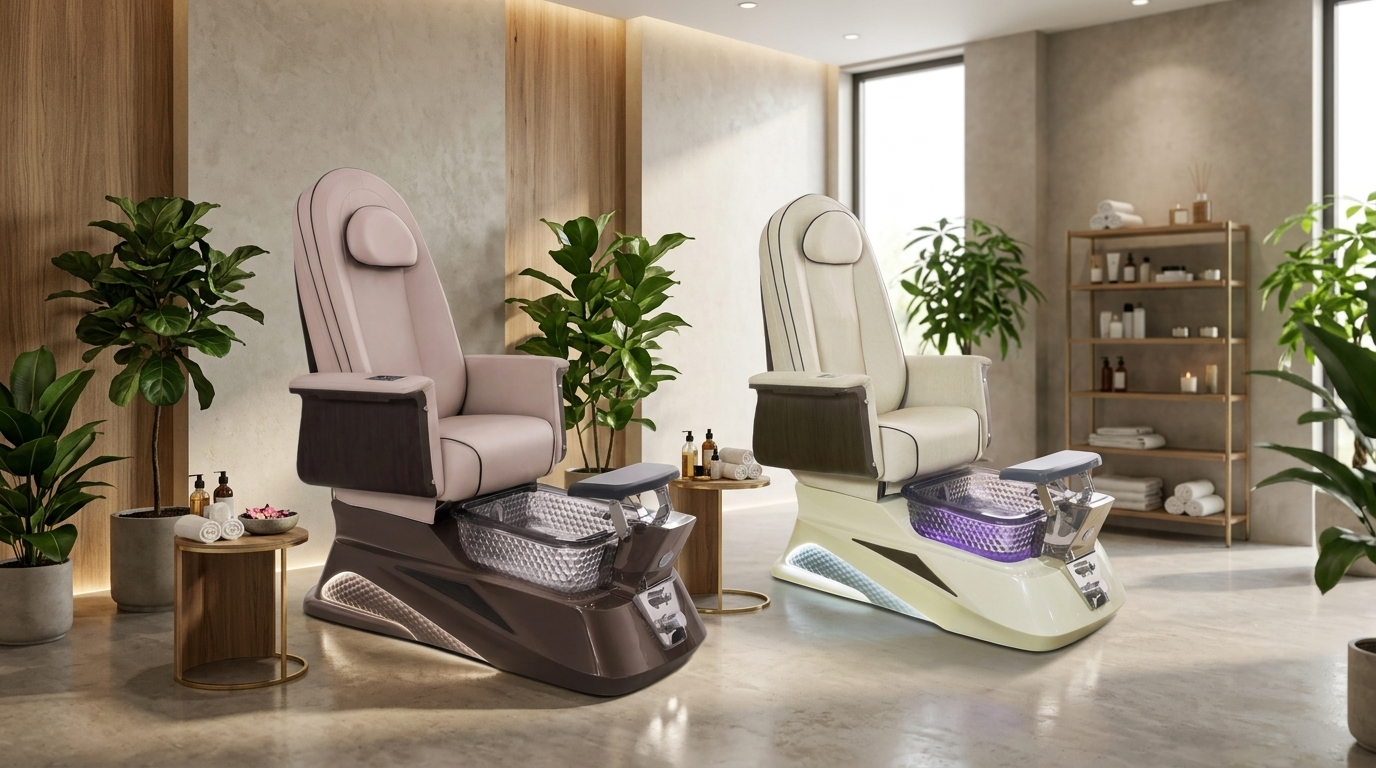
First of all, pre-owned pedicure spas often conceal worn-out massage motors, degraded seals, and clogged plumbing lines. Because discontinued models frequently lack factory warranty coverage and OEM replacement parts, a single broken pump can take a revenue-generating chair out of commission for weeks while costing thousands in emergency plumbing and flooring repairs.
Rapid Degradation from Acetone & Salon Chemicals
Secondly, nail stations are exposed daily to pure acetone, monomer, and gel cleansers. According to the UCLA Labor Center’s Nail Files California report, 52% of nail salon clients book gel polish services and 40% book acrylics—meaning low-grade particleboard tables and standard vinyl upholstery will not only bubble and peel within months, but also drive away discerning clients who expect a clean, upscale environment.
Lost Upsell Potential & Lower Retention
Industry consultants cited by NAILS Magazine report that the average salon loses 65% to 70% of first-time walk-ins (averaging only a 30%–35% new client retention rate). Also, basic manicures and pedicures account for only 26% of client bookings (UCLA Labor Center). Using outdated, uncomfortable chairs restricts your menu to basic $35–$45 services, whereas ergonomic, full-massage commercial chairs empower you to charge $70 to $100+ for deluxe spa packages.
Mistakes When Opening a Nail Salon: Real Estate Pitfalls
Rent and construction represent the largest fixed expenses for any salon, with national retail asking rents averaging ~$25 per sq. ft. per year and reaching $50/sq. ft. in major metro markets (Booksy). Choosing a location solely for a cheap lease often backfires:
Dead Rent from Unpermitted Construction
Build-out and renovation costs average $100 to $217 per sq. ft. due to specialized plumbing and electrical requirements (SimpliNail). Although hiring unlicensed contractors seems cheaper upfront, it frequently leads to failed municipal building, plumbing, or fire inspections. Furthermore, every week a Certificate of Occupancy (CO) is delayed forces you to pay “dead rent” alongside fixed overhead—typically requiring $5,000 to $50,000 in working capital reserves just to survive the first three to six months (Booksy).
Remote Locations & No-Show Revenue Loss
A cheap lease in a low-visibility strip center forces owners to overspend on local advertising. Also, data from NAILS Magazine estimates that salons lose 10% to 20% of potential monthly revenue to no-shows and late cancellations—equivalent to $1,500 to $3,000 per month for a salon generating $15,000 in bookings. Securing a high-visibility storefront paired with automated booking reminders helps protect your daily cash flow.
Poor Lighting & Ergonomics Hurt Productivity
Next, relying solely on standard commercial fluorescent tubes causes eye strain and inaccurate polish matching. Combining poor lighting with non-ergonomic seating slows down service times, directly hurting salon productivity, which NAILS Magazine notes should target 70% to 80% station utilization for healthy profitability.
Regulatory Oversights
It’s time to treat regulatory compliance and indoor air quality as non-negotiable investments rather than optional overhead:
State Board Inspection Fines & Closures
State Boards of Cosmetology conduct unannounced audits for sanitation and licensure. A legislative audit by the Kentucky Legislative Research Commission (LRC Research Report 492) revealed that average State Board fines surged by 426.5% between 2019 and 2023, with individual salon penalties commonly reaching $10,000 to $25,000 and triggering immediate temporary closures. Furthermore, a multi-year study of Michigan nail salons published in ResearchGate found that nearly two-thirds of disciplinary actions involved unlicensed activity or expired licenses.
Inadequate Ventilation Drives Away Top Talent
Standard HVAC systems only dilute indoor air; they do not remove volatile organic compounds (VOCs) or ethyl methacrylate (EMA) vapors at the breathing zone. Because both OSHA and the U.S. EPA recommend source-capture local exhaust ventilation (LEV) systems at each workstation (typically costing $500 to $1,500 per station, per Booksy), skipping proper ductwork leaves your salon vulnerable to sanitation citations. Not only does NAILS Magazine report that over 70% of clients are willing to pay more for safe, low-toxin salons, but also U.S. Bureau of Labor Statistics (BLS) data shows 152,770 employed nail technicians nationwide with roughly 21,900 job openings annually, meaning salons with poor air quality quickly lose skilled staff to better-equipped competitors.
Mistakes When Opening a Nail Salon: Workflow Bottlenecks
Last but not least, trying to save money by skipping automated chair features and modern salon software creates daily labor bottlenecks—especially since 69% of nail salons operate with fewer than five employees (U.S. Census County Business Patterns / UCLA Labor Center).
Running pedicure basins without automatic water-level shutoff (Auto-Fill) sensors forces technicians to constantly monitor filling tubs. Because a single distraction during a busy Saturday rush can cause basin overflows, skipping this feature risks ruined subflooring and costly water-damage repairs.
Also, today’s clients expect seamless convenience—from integrated wireless phone charging and built-in technician controls to online booking with deposit pre-authorization, which Rosper industry data shows can reduce no-shows on high-ticket services by 25% to 40%.
Build a Compliant, High-Margin Salon from Day One with KaShant LLC
Investing in commercial-grade equipment engineered for heavy daily salon traffic, chemical exposure, and strict municipal safety codes is the smartest way to protect your capital from day one.
It’s 100% UL-Certified Safety. Every electrical and mechanical component in the KaShant LLC Massage Chair and our full pedicure line carries official UL safety certification, not only keeping your clients and staff safe, but also helping you pass City and State Board inspections without costly delays.
Furthermore, equipped with full-body multi-point massage systems, acetone-resistant upholstery, integrated touchscreen controls, wireless phone charging, and automated fill/drain protection, KaShant LLC chairs elevate the client experience and maximize repeat bookings.
Finally, KaShant comes with complete salon packages and nationwide support. From synchronized custom manicure tables and technician stools to reception desks and pedicarts, KaShant LLC offers bundled package pricing, fast shipping across all 50 U.S. states.



Leave a Reply